China’s Export Boom Lifts Q3 Growth to 4.5% as Domestic Demand Lags


China's economy grew 4.5% in the third quarter from a year earlier, propelled by strong exports, officials reported on Monday. The result brings Beijing closer to its full-year growth goal even as trading partners push to narrow their deficits with the world's second-largest economy.
The pace picked up from 4.3% in the second quarter, the weakest reading in more than three years, and lifted growth over the first nine months to 4.6%. Chinese leaders have targeted expansion of 4.5% to 5% for the year, compared with 5% last year. The International Monetary Fund recently cut its 2026 forecast for China to 4.5%, the bottom of that range.
Behind the headline, the picture is lopsided. Dave Chia, an economist at Moody's Analytics, said domestic demand remained weak while trade surged. He expects exports to stay solid but warned that global trade barriers pose a risk. Consumers continue to feel the strain of a property downturn now in its fourth year. Max Zenglein, Asia Pacific senior economist at The Conference Board, argued that the official growth figure increasingly fails to show how the economy is faring, because it hides widening gaps across industries, regions and households. Managing those domestic imbalances, he said, may prove harder than handling external pressure. Mao Shengyong, deputy head of the National Bureau of Statistics, struck a similarly cautious note, describing a complex and volatile international environment, prominent weakness in domestic demand and a recovery that still needs firmer foundations.
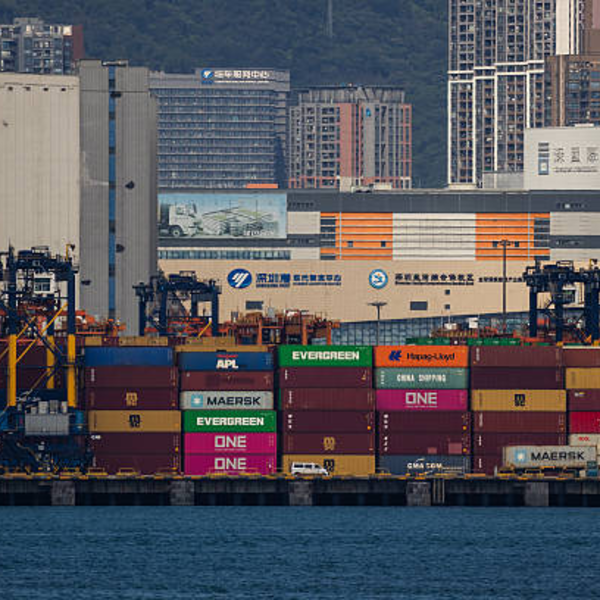
Exports are among the few bright spots. Shipments rose 36% last month, and China had accumulated a $938 billion trade surplus from January through September, putting it on course to beat last year's record of $1.2 trillion. High U.S. tariffs have dented some bilateral trade and pushed exporters toward Southeast Asia, Latin America and Europe, while semiconductors and vehicles, including hybrid and electric models, are driving this year's gains. Exports to the European Union climbed 16% in the first nine months.
The surge reflects industrial strategy. In pursuit of self-sufficiency that would insulate it from Western export controls and trade uncertainty, Beijing has built vast, heavily subsidized capacity in sectors such as solar panels and electric vehicles. Production expanded quickly while household spending languished, so many of those goods now reach foreign buyers at competitive prices. Ecaterina Bigos, senior market strategist at BNP Paribas Asset Management, noted that a tech-driven, export-dependent model has produced limited job creation and narrow income gains, while the risk of labor displacement from artificial intelligence grows.
Foreign governments are growing uneasy. The 27-nation EU runs a deficit with China of more than $1.1 billion a day and is weighing further curbs, even after agreeing this month with Beijing to roughly halve Chinese hybrid vehicle imports over the next few years. Gary Ng, a senior economist at Natixis, said such deals let China retain market access and probably sell more in the long run while avoiding a broad tariff increase. Lynn Song, chief economist for Greater China at ING, cautioned that the imbalances will be hard to resolve quickly. Some policymakers say an undervalued yuan against the dollar and euro has swelled the surplus, a claim the central bank rejects. Governor Pan Gongsheng said Friday that deficit and surplus countries should work together.