Syngenta Targets Up to $88 Billion Valuation in Hong Kong IPO as China's Agricultural Giant Returns to Capital Markets


Syngenta's financial advisers are promoting the company to potential investors at a valuation equivalent to approximately 15 to 20 times its expected 2026 earnings before interest, taxes, depreciation and amortization (EBITDA). UBS and China International Capital Corporation are leading the marketing process, with China CITIC Bank and Bank of America also involved in the transaction. Syngenta reported EBITDA of approximately $4.4 billion in 2025, representing a 17% increase from the previous year. Applying the proposed valuation multiples to that historical earnings figure produces an indicative enterprise value of $66 billion to $88 billion, although the final valuation will depend on updated earnings expectations, investor demand and market conditions. The company is reportedly considering selling approximately 10% to 20% of its equity, with proceeds expected to support debt reduction and further investment in agricultural technologies. The proposed valuation remains an investment-banking target rather than an agreed IPO price.
The planned offering represents another chapter in China's efforts to transform a major international acquisition into a globally competitive agricultural technology business. In 2017, China National Chemical Corporation, commonly known as ChemChina, acquired Syngenta for approximately $43 billion, completing one of China's largest overseas acquisitions. ChemChina subsequently merged with Sinochem in 2021, consolidating major chemical and agricultural businesses under Chinese state ownership. Syngenta previously pursued a public listing on Shanghai's STAR Market but withdrew the application in 2024 amid changing market conditions. A successful Hong Kong debut would therefore provide an alternative route to public-market financing and potentially establish a new benchmark for internationally operating Chinese-controlled businesses. Syngenta's extensive global footprint, with more than 50,000 employees across over 90 countries, also distinguishes it from many companies entering Hong Kong's equity market.
A central element of Syngenta's IPO strategy is its effort to position itself as a biotechnology-driven agricultural innovation company rather than a conventional producer of agricultural chemicals. The group competes internationally with companies including Bayer, BASF and Corteva, supplying crop-protection products such as herbicides, insecticides and fungicides alongside advanced seeds, biological solutions and digital farming technologies. According to people familiar with the IPO preparations, advisers are emphasizing Syngenta's research pipeline, particularly the development of seed varieties with improved resistance to diseases and pests, to support its proposed valuation. This positioning is financially significant because investors may assign higher valuation multiples to businesses with differentiated technology, proprietary intellectual property and long-term growth opportunities than to conventional chemical producers exposed to commodity cycles. Nevertheless, Syngenta's ability to justify such a valuation will depend on the commercialization of new agricultural products, sustainable earnings growth and competitive performance against established industry rivals.
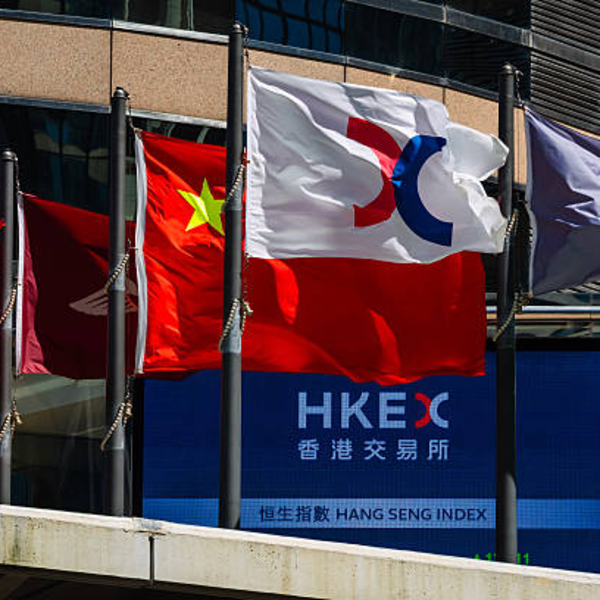
The timing of the proposed IPO is closely connected to Hong Kong's recovery as an international fundraising center. According to Hong Kong Exchanges and Clearing data cited by Reuters, 118 companies completed listings during the first nine months of 2026, raising approximately HK$388 billion, equivalent to $49.5 billion. This represented an increase of 106% compared with the corresponding period of 2025, highlighting renewed investor interest in the city's capital markets. However, recent weakness in artificial intelligence-related equities has raised concerns about elevated valuations and the sustainability of technology investment returns. Against this backdrop, some Asian institutional investors have reportedly shown greater interest in established industrial businesses. Syngenta's advisers have been meeting prospective investors in Shanghai, Hong Kong and Beijing, with further marketing planned in Frankfurt and London. Although a listing before the end of 2026 remains possible, sources indicate that January 2027 is a more likely window.
The transaction could carry broader implications for China's state-owned enterprises, Hong Kong's financial markets and the international agricultural industry. A successful multibillion-dollar offering would demonstrate that Chinese-controlled multinational companies can attract substantial international capital despite geopolitical uncertainty and changing investor preferences. For Sinochem, the listing could help reduce financial leverage associated with its agricultural operations while providing funding for research, product development and future expansion. For Hong Kong, the transaction would reinforce its position as a major international financing platform connecting Chinese corporate ownership with global institutional investors. However, significant uncertainties remain, including the final IPO valuation, regulatory approvals, global agricultural demand, competitive pressures and market volatility. Ultimately, Syngenta's ability to secure its targeted valuation will depend not only on its financial performance but also on whether investors accept its long-term transformation from an agricultural chemicals producer into a higher-value agricultural biotechnology business.